
Is your IFS solution ready for Peppol? Here’s what you need in place
From 1 January 2027, Norwegian businesses must send invoices to each other (B2B) as e-invoices. If you run IFS, most of the work is about having the right setup and the right data in place. Here is what changes, what it means for you, and a checklist you can go through with your team.
By Kristian Maric
Commercial Development Manager
What’s happening with e-invoicing in the Nordics?
Peppol is a shared network and standard that businesses use to exchange documents on, for example invoices, credit notes and orders with each other. Peppol is not a vendor. You connect to the network through an access point provider, who delivers your documents to your customer’s access point.
The Norwegian Tax Administration (Skatteetaten) is introducing the requirements in three steps:
| Date | What changes |
|---|---|
| 1 January 2027 | Businesses obliged to keep accounts under Norwegian bookkeeping rules must send a structured e-invoice to other businesses with the same obligation. Until 2030, this applies only when the buyer is registered in ELMA, the Norwegian register tightly integrated with the Peppol network. |
| 1 January 2028 | The buyer’s organisation number must be on the invoice. |
| 1 January 2030 | Businesses subject to Norwegian bookkeeping requirements must be able to receive e-invoices, and bookkeeping must be digital. |
A PDF invoice does not count as a structured e-invoice, even when you send it by email. Until the end of 2029, you can also use other structured formats than EHF (Peppol BIS), such as EDIFACT, if you have agreed this with the buyer. A buyer can always demand EHF.
What about Sweden and Finland?
Sweden has no B2B requirement yet. If you sell to the public sector, you have had to send e-invoices since 2019. A government inquiry will present its proposal by 30 November 2027.
Finland has no general B2B requirement. However, since April 2020, both businesses and public sector buyers have had the right to demand e-invoices from suppliers with a turnover above EUR 10,000.
In both countries, the EU’s ViDA package (VAT in the Digital Age) will require e-invoices for B2B trade between EU countries from 1 July 2030. If you have companies in Sweden or Finland, it makes sense to include them in the same project, even though the Norwegian deadline does not apply to them.
What does this mean for you as an IFS customer?
IFS can send and receive e-invoices, but your solution needs to be set up for it and connected to an access point. How much work this takes depends on your IFS version, how your invoicing works today, and whether you already send e-invoices to public sector customers. If you do, you have a head start.
In practice, you need to make sure that:
- IFS has the right data about your customers and suppliers, including organisation numbers and Peppol IDs.
- IFS is able to create invoices and credit notes in EHF (Peppol BIS 3.0) that pass validation.
- Incoming e-invoices go straight into IFS and reach the right person for approval.
- Every company you run in IFS has its own setup, not just the parent company.
Checklist: what you need in place
Use this list to see where you stand today. Each point needs an owner and a date.
- Access point provider: Have you chosen a Peppol access point provider, and is the agreement signed?
- Registration in ELMA: Is your company registered as a receiver of e-invoices? Does the same apply to all your Norwegian subsidiaries?
- Master data in IFS: Do your customers and suppliers have correct organisation numbers and Peppol IDs? Is your own company data correct?
- Outgoing e-invoices: Can IFS send invoices and credit notes in EHF (Peppol BIS 3.0) that pass validation?
- Incoming e-invoices: Do the e-invoices you receive go into IFS automatically and reach the right approver?
- Testing: Have you tested with real customers and suppliers, including credit notes and what happens when an invoice fails?
- Internal process owner: Who follows up invoices that fail, and who owns the process after go-live?
Can’t tick every box? In 30 minutes, we go through your IFS setup with you and tell you what’s missing.
Common pitfalls
1. Poor master data
An e-invoice only reaches the receiver if the organisation number and Peppol ID are correct. If the data in IFS is wrong or missing, the invoice stops before it reaches your customer. Validation also checks the content: if VAT totals do not match the invoice lines, the receiver’s access point rejects the invoice. Clean up your customer and supplier data early. It is the single most useful thing you can do now.
2. Starting too late
Choosing an access point provider, setting up IFS and testing with your customers and suppliers takes time. You also depend on your trading partners being ready. Start now, so you have time to test properly before 1 January 2027.
3. Forgetting subsidiaries in other countries
Many groups get the Norwegian company ready and forget the rest. Your Swedish and Finnish companies may already need e-invoices for public sector customers, and Finnish customers can demand them. Map all your companies and countries in one plan, so you avoid doing the same work twice before ViDA arrives in 2030.
How Addovation can help
We help IFS customers get ready for e-invoicing, from checking your setup and master data to testing with your trading partners and following up after go-live. We work with IFS Cloud, NetSuite and Oracle Fusion, so if your group runs more than one ERP system, we can look at the whole picture.
We are also launching a portal, expected around the turn of the year, that gives you one overview of all e-invoices in and out of your companies. You see the status of every document, which channel it went through, and a clear message when something fails.
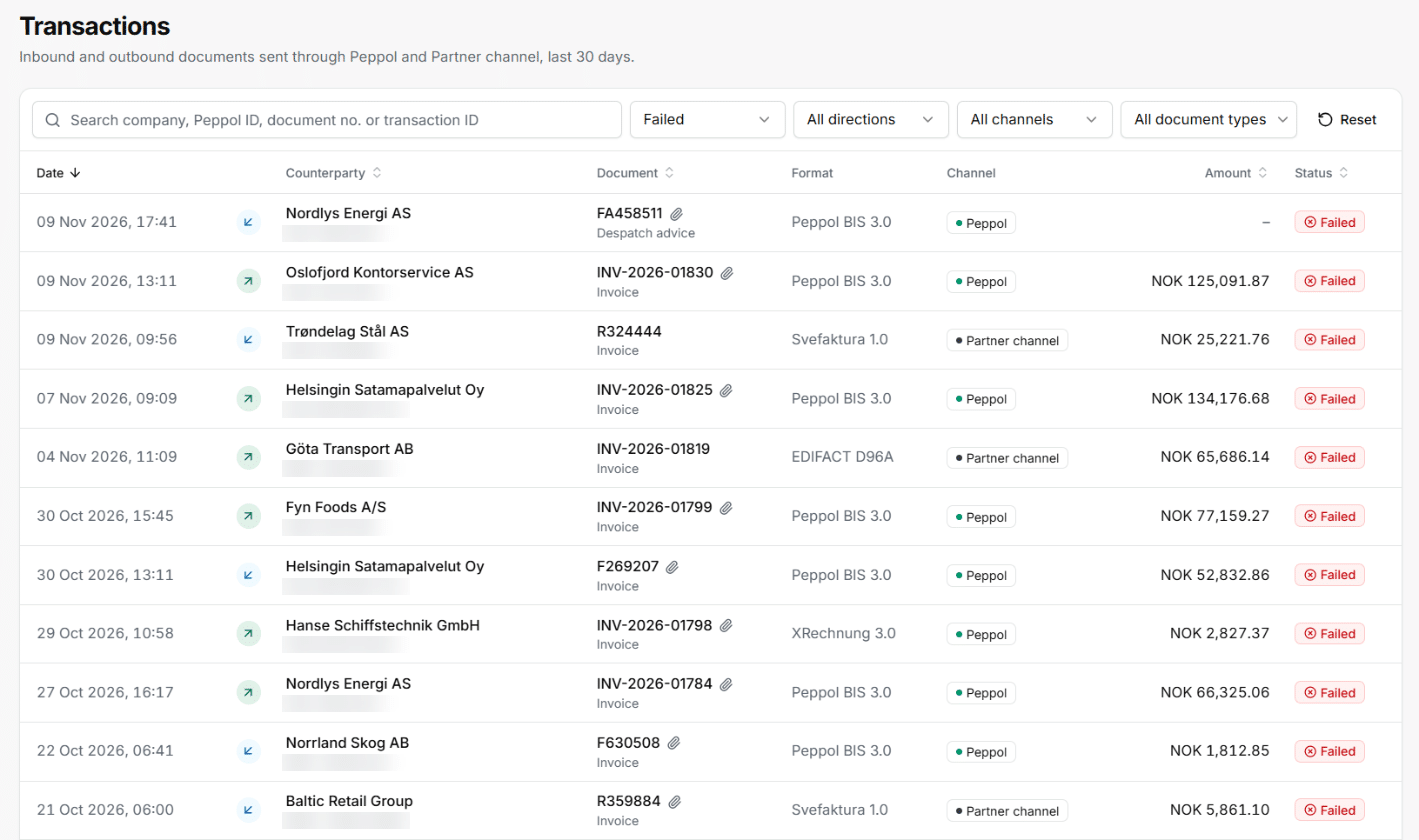
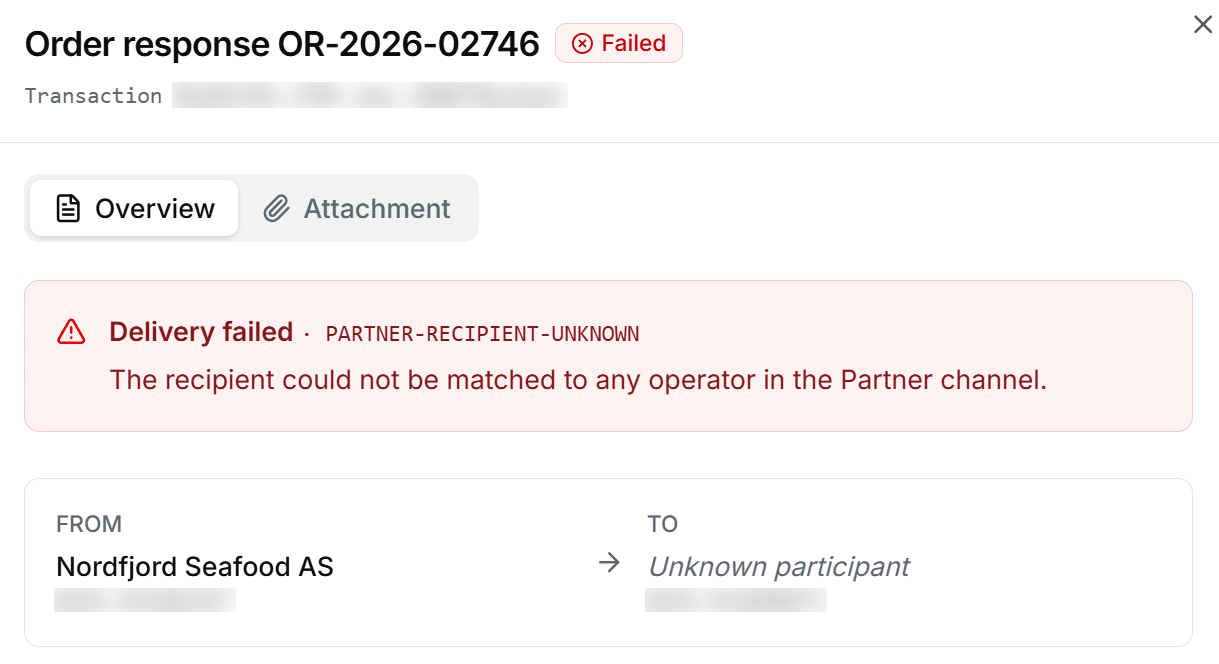
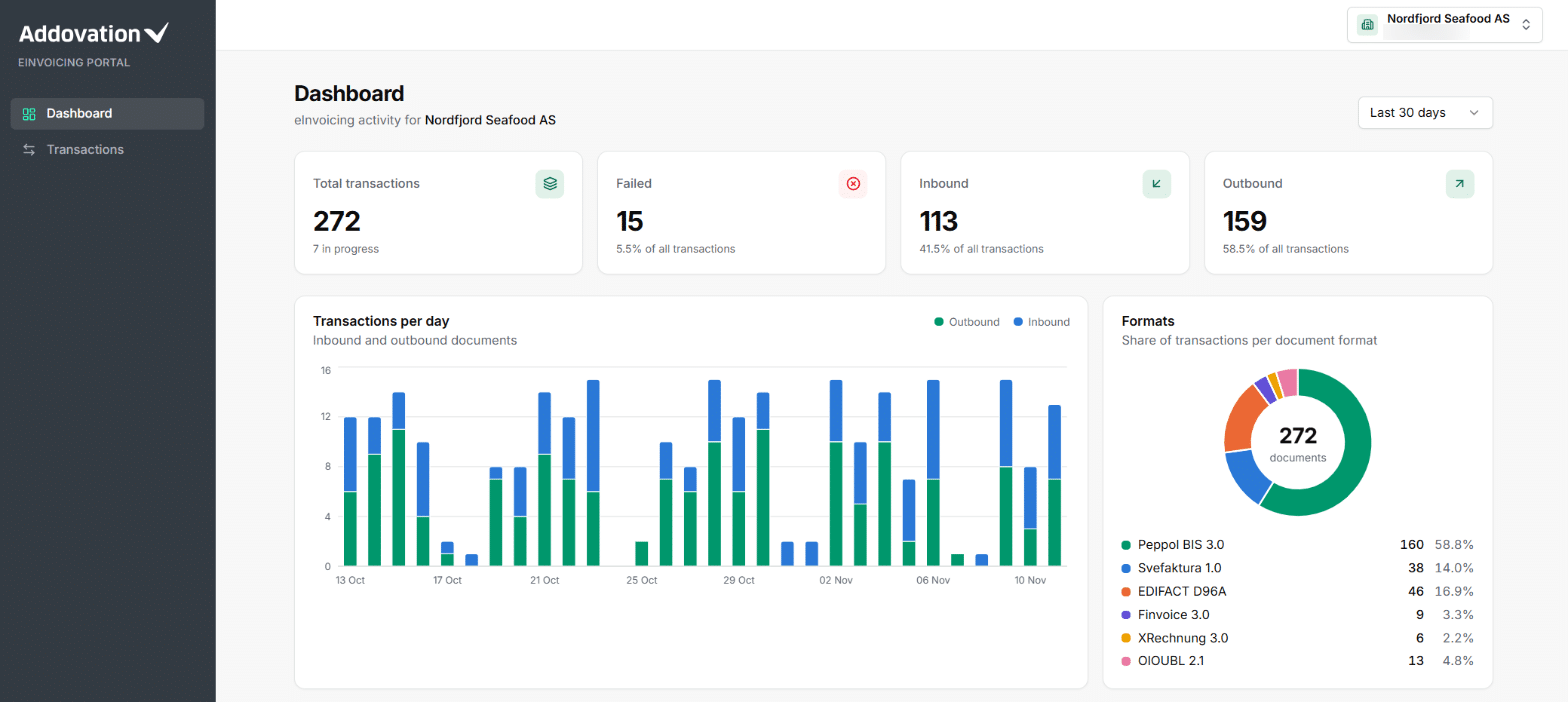
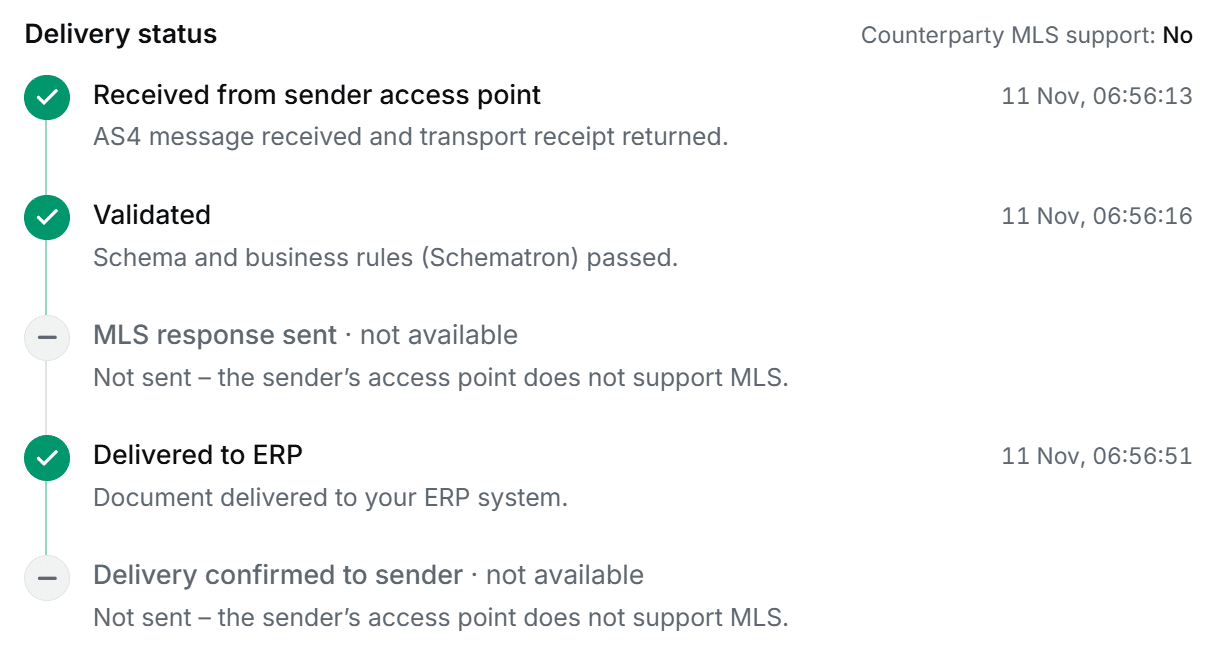
A first look at our upcoming e-invoicing portal. Screenshots with demo data from a solution that is not yet launched, so details may change.
Sources
- Skatteetaten: Plikt til å sende e-faktura fra 1. januar 2027
- Skatteetaten: Forskrifter til lovendringer om digital bokføring og e-fakturering
- PwC: Nye krav til e-faktura og digital bokføring
- Skatteverket: ViDA – nya EU-regler om e-fakturering
- Finlex: Act on electronic invoicing 241/2019 (Finland)
- European Commission: Adoption of the VAT in the Digital Age (ViDA) package
Book a short review
Not sure where you stand? In 30 minutes, we go through your IFS setup against the checklist with you and tell you what needs to be in place before 1 January 2027.